Türkiye · Cappadocia
Cappadocia School Trip Guide: Curriculum Links and Preparation
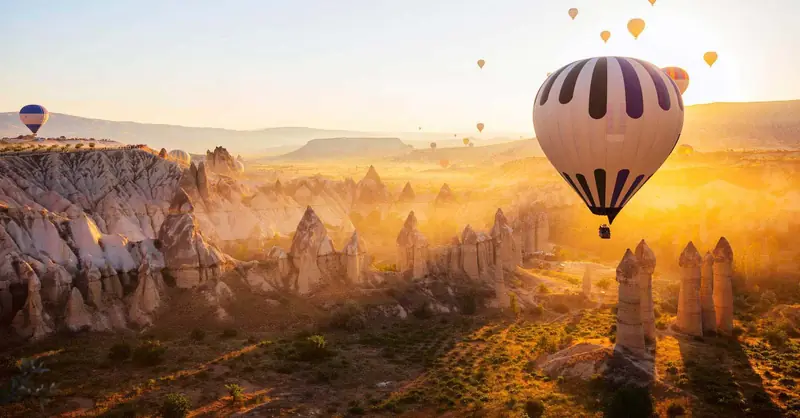
For high school groups, Cappadocia is one of the rare trip routes that brings geography, history and art history together in one place. Our 2 nights, 3 days Cappadocia tour covers the Ihlara Valley, an underground city, the fairy chimney valleys and Göreme Open-Air Museum; accommodation, breakfast and dinner are included in the programme. This article is written for teachers and administrators planning the trip.
Why Cappadocia?
Concepts students read about in their textbooks, such as "volcanic tuff", "erosion" or "early Christianity", take on concrete form in Cappadocia. Showing a diagram in class of how fairy chimneys form is one learning experience; standing at the foot of that fairy chimney is quite another. The underground cities are a powerful example of how people adapted to geography.
Links to lessons
Geography
- Volcanism and rock formation: how ash and lava from volcanoes such as Erciyes and Mount Hasan turned into tuff.
- External forces: how fairy chimneys formed through erosion by rivers and wind; observation at Devrent and Paşabağ.
- River valley: how the Melendiz River carved the canyon of the Ihlara Valley.
- Lake Tuz (Salt Lake): the closed basin of Central Anatolia and salt production; seen as a panoramic stop in the programme.
History
- Underground cities: the need for safety, community life and defensive architecture at Derinkuyu or Kaymaklı.
- Early Christianity and the Byzantine period: rock-cut churches and monastic life.
- Uçhisar Castle: the defensive role of natural rock castles.
Art history and visual arts
- Frescoes: the wall paintings of the Elmalı (Apple), Yılanlı (Snake), Çarıklı (Sandal) and Tokalı (Buckle) churches at the Göreme Open-Air Museum.
- Traditional crafts: pottery made in Avanos from the red clay of the Kızılırmak River, and onyx stonework.
The programme through students' eyes
- Day one: Meet at school and depart for Cappadocia.
- Day two: After breakfast: Lake Tuz (panoramic), a walk in the Ihlara Valley, the Ağaçaltı and Yılanlı churches, Derinkuyu (or Kaymaklı) Underground City, a photo stop at Uçhisar and Pigeon Valley, an open-buffet lunch, pottery in Avanos, Paşabağ, Devrent Valley and the Üçgüzeller (Three Beauties) in Ürgüp. Dinner and overnight at the hotel.
- Day three: Breakfast, an onyx stone workshop, the Göreme Open-Air Museum and the return journey via Ankara and Bolu.
Day two is busy and involves plenty of walking. Telling students about the pace of this day in advance makes a real difference, both for choosing shoes and for managing their energy.
What you can do in class before the trip
- A short presentation on how fairy chimneys form, plus a “find this on site” task.
- Split students into groups and give each group a stop: Ihlara, the underground city, Avanos, Göreme. Back at school, each group presents its own stop to the class.
- A simple observation sheet for the frescoes at Göreme: which colours, which scenes, how well preserved?
Things to watch during the trip
- Underground city: The passages are narrow and low. Assign a teacher in advance to students who struggle in enclosed spaces.
- Ihlara steps: Students go down in single file; don't rush them.
- Rock-cut churches: Tell students in advance not to touch the frescoes and not to speak loudly.
- Photo stops: At the Uçhisar and Pigeon Valley viewpoints, don't let anyone go near the cliff edges.
A short list for students' bags
- Comfortable, non-slip trainers
- A coat suited to the season and a light cardigan
- A water bottle and a small backpack
- A sun hat (spring and summer)
- Notebook and pen
- ID and any documents the school requires
Evaluation after the trip
The learning impact of a trip often becomes clear in the week after you return. A few ideas:
- Each group presents its own stop in a five-minute talk.
- A class display titled “How Cappadocia Was Formed”, made from the students' own photos.
- A short writing assignment on the colours and scenes seen in the Göreme frescoes.
- A drama activity bringing life in the underground cities to life.
A small note for teachers: holding a short get-together at the hotel on the evening of day two and asking for the most memorable moment of the day both focuses students' attention and gives you ready material for follow-up work.
Which time of year works best?
For school trips, spring and the first weeks of autumn stand out, with weather that suits walking. In winter, the cold and short days can make the programme harder; in summer, the midday heat can tire students. We cover the seasonal differences in detail in our when to visit Cappadocia article.
Information for parents
Parents usually ask about accommodation, meals and safety. The programme includes 2 nights in a hotel, open-buffet breakfast and dinner at the hotel, and an open-buffet lunch on day two. The hotel is chosen according to the date and group size and is stated in writing in the quote. A hot-air balloon flight is not part of the programme; it does not usually come up for school groups.
For how our school trips generally work and for other options, see our school trips page.
Frequently asked questions
How long is the Cappadocia school trip?
Our programme is 2 nights, 3 days. Day one is spent travelling; days two and three are spent exploring the region.
Which year groups is the Cappadocia trip suitable for?
Because of its content and walking pace, the programme is designed especially for high-school groups. For other age groups, we look at your needs together at the quote stage.
Which hotel do the students stay in?
The hotel is chosen according to the trip date and group size and is stated in writing in the quote.
Which museums and historical sites does the trip include?
The programme includes the Göreme Open-Air Museum, Derinkuyu or Kaymaklı Underground City, the Ihlara Valley and rock-cut churches. We cover the underground cities in a separate article.