International · Morocco
Cities to Visit in Morocco: Marrakesh, Fez, Chefchaouen and the Gateway to the Desert
For first-time visitors, Morocco's cities fall into four groups: the imperial cities (Marrakesh, Fez and Meknes), the mountain and coastal cities of the north (Chefchaouen, Tetouan, Tangier), the gateways to the desert south of the Atlas Mountains (Ouarzazate and Erfoud) and modern Casablanca on the Atlantic coast. A route covering all of these needs more than a week, because the distances are long and the journey itself is an important part of the trip.
Below we describe each city's character, why it is on the route and what to keep in mind there.
The imperial cities
Marrakech
With its reddish, earth-coloured walls and bustling medina, Marrakesh is the first city that comes to mind when you think of Morocco. At its heart is Jemaa el-Fnaa square: by day it is full of juice sellers and henna artists, and in the evening it is transformed by food stalls, musicians and storytellers. The minaret of the Koutoubia Mosque, rising near the square, is the symbol of the city. The markets (souks) in the narrow streets of the medina are packed with shops selling leather, spices, lamps and carpets.
Fez
Fez's old city, Fes el-Bali, is described as one of the largest car-free urban areas in the world. In its labyrinthine streets you come across mules carrying goods, craft workshops and historic madrasas. The Al-Qarawiyyin here is considered one of the oldest educational institutions in the world still in operation. Fez's leather tanneries are famous for their colourful dye pits, watched from the terraces above; the smell is strong, so don't be surprised if you are handed a sprig of mint.
It is very easy to get lost in the Fez medina. Having a local guide with you makes things much easier.
Meknes
Meknes, close to Fez, became the capital under Sultan Moulay Ismail and was endowed with magnificent gates, walls and granaries during that period. The city's best-known structure is the Bab Mansour gate, notable for its decoration. Being quieter than Fez and Marrakesh, it offers a breather for those tired of the crowds.
Mountain and coastal cities of the north
Chefchaouen
Chefchaouen, at the foot of the Rif Mountains, is famous for its medina, whose walls, doors and steps are painted in shades of blue. It is a place you visit less for sightseeing than for strolling slowly through the streets, taking photos and enjoying the mountain air. Early in the morning the streets are quieter and the light is softer.
Tetouan
Tetouan, close to the Mediterranean, is known for its whitewashed houses and a medina where Andalusian influence can be felt. Muslim and Jewish migrants from Andalusia played an important role in the city's development. It has far fewer tourist crowds than Marrakesh and Fez.
Tangier
Overlooking the Strait of Gibraltar, Tangier is the gateway between Africa and Europe. For centuries it was a meeting point of different cultures, and in the 20th century it attracted many writers and artists. The view from the Kasbah over the strait, and on clear days to the opposite shore, is one of the city's finest moments.
Beyond the Atlas: gateways to the desert
Ouarzazate
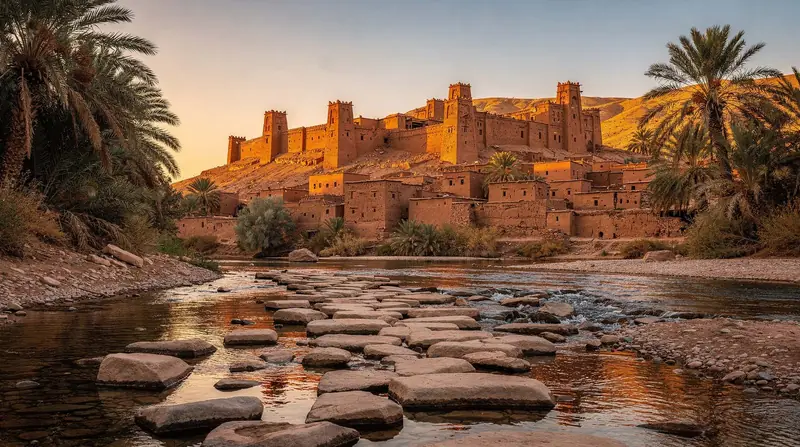
Ouarzazate, reached after crossing the High Atlas Mountains, is known as the "gateway to the desert". Thanks to its mud-brick kasbahs and the surrounding landscapes, it is a region where many films have been shot. The mountain road over the Atlas pass is an unforgettable experience in itself; however, it is winding, so those prone to travel sickness should take precautions.
Erfoud
Erfoud, in south-east Morocco on the edge of the Sahara, is known for its date palm groves and fossil workshops. Its proximity to desert scenery where the sand dunes begin adds a different flavour to the route.
The Atlantic coast: Casablanca
Casablanca, Morocco's largest city and economic centre, is a modern port city. The Hassan II Mosque, on the ocean shore and partly built over the water, is the city's most important sight. For most travellers, Casablanca is the gateway in or out of Morocco.
Seeing all these cities on one route
TatiliYakala's Grand Morocco tour lasts 7 nights, 8 days and covers Marrakesh, Casablanca, Fez, Meknes, Chefchaouen, Tetouan, Ouarzazate, Erfoud and Tangier. The catalogue lists flights with Air Arabia, accommodation in 4-star hotels, breakfast and dinners, and transport by luxury coach. The daily itinerary and guiding arrangements are shared in writing at the quotation stage.
If you are wondering which season to go in, read our article When to go to Morocco; if you are curious about the food, see Moroccan food culture.
For visa and entry requirements, check the current situation with Morocco's official sources and the Turkish Ministry of Foreign Affairs before you travel.
Travelling between cities
Distances between cities in Morocco are long, and a significant part of the route is spent on the road. The roads over the Atlas pass, through the Rif Mountains and along the edge of the desert are scenic but winding; if you are prone to travel sickness, take precautions.
Frequently asked questions
Which cities in Morocco are a must?
On a first visit, Marrakesh and Fez are on almost everyone's list. If you have time, the blue city of Chefchaouen and the gateways to the desert south of the Atlas are the most memorable parts of the trip.
How many days do you need to tour Morocco?
A few days are enough for Marrakesh alone. If you want to see the imperial cities, the north and the edge of the desert together, a week-long programme is more realistic.
What is the difference between Fez and Marrakesh?
Marrakesh is livelier, more colourful and more touristy; Fez is more traditional and stands out for its crafts and its tradition of religious learning. The two complement each other.
Why is Chefchaouen blue?
There are different explanations for why the medina is painted blue; it is said to keep things cool, to keep mosquitoes away or to carry a spiritual meaning. What is certain is that today the colour has become the city's identity.