International · Italy
Guide to Italy's Museums: Uffizi, the Vatican and the Trail of the Renaissance
The best way to make the most of the limited time you have for art in Italy is to focus on a few major collections: the Uffizi Gallery and the Accademia in Florence, the Vatican Museums and the Sistine Chapel in Rome, and the Doge's Palace in Venice. For the ancient world, the Pompeii excavations and the Roman Forum are open-air museums in their own right. As most of these places are in high demand, visits need to be planned in advance.
Florence: seeing the Renaissance where it happened
Uffizi Gallery
Built in the Medici era to house government offices, the Uffizi is today home to one of the most important collections of Renaissance painting. These works can form the backbone of your visit:
- Botticelli's The Birth of Venus and Spring (Primavera)
- Early works by Leonardo da Vinci
- Paintings by later masters such as Caravaggio and Titian
The Uffizi is a large museum. Rather than trying to stop in every room, choosing three to five works in advance and reading their stories makes the visit far more meaningful.
Accademia Gallery
The star of the Accademia is Michelangelo's David. Carved from marble, this giant statue is far more impressive than it looks in photos. The same museum also holds Michelangelo's unfinished sculptures known as the "prisoners", which look as if they have not yet fully emerged from the marble. These works give students a wonderful example of how the sculptor worked with stone.
Open-air works
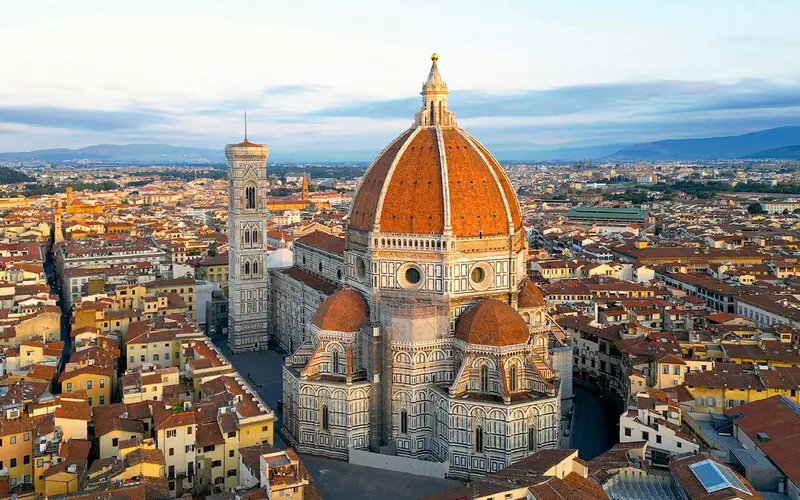
In Florence you come across art even without entering a museum. The statues in Piazza della Signoria, the façade of the Duomo and the bronze doors of the baptistery are all works of art. Ghiberti's east doors of the baptistery are said to be the ones Michelangelo named the "Gates of Paradise".
Rome and the Vatican: from the ancient world to the Renaissance
Vatican Museums and the Sistine Chapel
The Vatican Museums are a vast collection gathered by the popes over centuries. They include ancient sculptures, the Gallery of Maps, the Raphael Rooms and, at the end of the visit, the Sistine Chapel. Michelangelo's ceiling frescoes and the Last Judgement on the altar wall are the heart of the chapel. Visitors are expected to stay quiet and not take photos in the chapel.
The museums can be very crowded and the corridors are long. It is important to allow plenty of time, wear comfortable shoes and dress appropriately for a religious site (shoulders and knees covered). The same rule applies to St Peter's Basilica.
Colosseum, Forum and Palatine
Rome's ancient sites can be thought of as the exhibition halls of a museum. At the Colosseum you see the structure of the arena where gladiator games were staged, and at the Forum the centre of Rome's political and religious life. A short read on Roman history before your visit makes the ruins much easier to understand.
Pompeii: a city frozen in time
Pompeii is a Roman city buried under ash by the eruption of Vesuvius in AD 79. Thanks to the excavations, its houses, shops, baths, theatres and streets can be visited today. The wall paintings and mosaics give a unique idea of what daily life looked like in ancient Rome.
Many of the finds from Pompeii are displayed at the National Archaeological Museum in Naples. On the Classic Italy Tour, Naples and Pompeii are part of the day 3 programme; the exact scope is stated in writing at the quote stage.
Venice: collections as old as the city itself
In Venice, the Doge's Palace is both a seat of government and an art venue filled with huge paintings. Works by Venetian painters such as Tintoretto and Veronese cover the walls of its halls. The gold-ground mosaics of St Mark's Basilica show the link with Byzantine art, a connection that is especially interesting for visitors from Istanbul.
Museum tips for student groups
Italy offers an intensive cultural programme for high school groups studying art history and the ancient world. A few suggestions to make museum visits memorable:
- Preparation before the trip: Have each student choose a work or an artist and prepare a short presentation. Giving the presentation in front of that work in the museum makes the learning stick.
- Focus list: Pick no more than five works for each museum. Trying to see everything in large collections is tiring.
- Sketchbook: Trying to draw a statue or a façade makes you look far more carefully than taking a photo.
- Rules: Rules on flash, food and large bags vary from museum to museum. Brief the group in advance at the entrance.
You can find our general approach to school groups on the school trips page.
Fitting museum visits into the programme
On a short tour, it is not always possible to go inside every museum. The Classic Italy Tour is an intensive programme combining Florence, Pisa, Siena, San Gimignano, Rome, Venice and Bologna in 4 nights, 5 days. The catalogue lists the daily route; we agree together at the quote stage which museums you will go inside, depending on the date and availability.
If you have not decided which season to go to Italy, our when to go to Italy article also gives an idea of the busy and quiet periods at the museums.
Frequently asked questions
Uffizi or Accademia: which should you see?
It depends on your goals. The Uffizi stands out for Renaissance painting, the Accademia for Michelangelo's David. If your time is limited, choose based on your group's interests.
How long do you spend in the Vatican Museums?
As the collection is very large, the visit takes several hours. The Sistine Chapel is at the end of the route, so allow enough time to move through without rushing.
Is there a dress code for entering museums?
Shoulders and knees are expected to be covered in the Vatican Museums, St Peter's Basilica and churches. Carrying a light shawl or cardigan is a practical solution.
Do you need a guide to visit Pompeii?
It is not compulsory, but the site is very large and the meaning of the ruins is much easier to grasp with an explanation. For groups, a guided visit is usually more rewarding.