
International · International
How to Plan a School Trip Abroad: Step by Step for Teachers
A school trip abroad takes longer to plan than an ordinary school trip, but it is a lasting experience for students: the route should be linked to the curriculum, parents should be informed early, enough time should be left for documents, and the supervision arrangements should be set up from the start. School management approval and official permission procedures are at the heart of this plan. Below we walk through the process step by step from a teacher's point of view.
1. Set the purpose and route
A good school trip starts not with the question "where shall we go?" but with "what should the students learn?". A route you can link to subjects such as history, literature, art, geography or a foreign language makes the trip easier to explain to both students and parents.
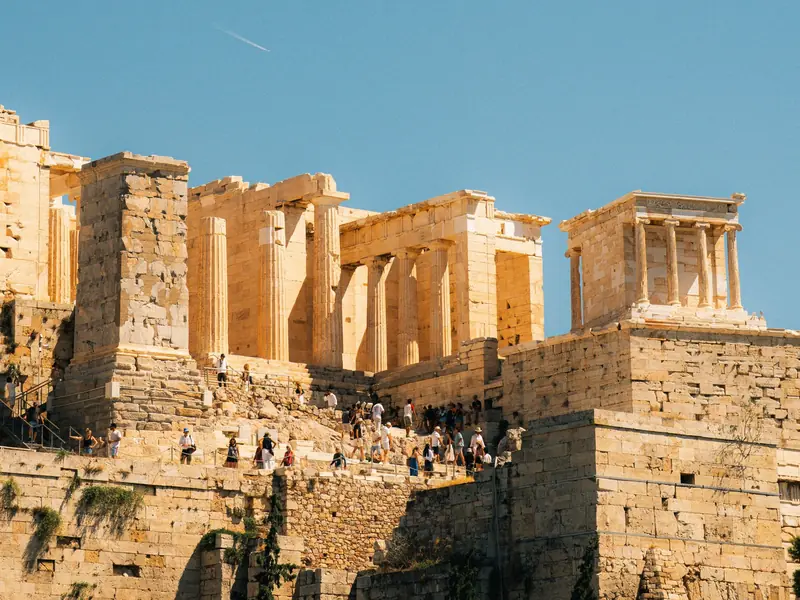
Ancient Greece, for example, offers rich material for history and philosophy lessons. The Athens and Delphi Tour is a 3-night, 4-day programme with hotel accommodation and is considered suitable for school groups; the Acropolis, the Acropolis Museum, Delphi and the Temple of Poseidon at Sounion are part of the programme. Balkan cities, meanwhile, link directly to Ottoman history; for this, see our article on the Ottoman heritage of the Balkans. You can see all the options on our international tours page.
When choosing a route, consider the students' age, the length of the trip and the daily travel pace together. For younger age groups, short routes with few changes of city are usually more comfortable.
2. School management and official procedures
School trips abroad require the approval of the school management and the permission procedures set out in the Ministry of National Education (MEB) regulations. As the details of these procedures and the documents required may change over time, check the current situation with your school management and the relevant official sources. Put this step at the very start of your planning; the route, dates and number of participants may depend on these approvals.
3. Build the timeline backwards
Working out a timeline backwards from the trip date reduces the risk of documents not being ready in time:
- A few months before: the route and date are set and submitted to the school management, and a quote is obtained from the agency that will organise the tour.
- Straight after: parents are given initial information and expressions of interest are collected.
- Documents: the process is started for passports, visas (if required) and parental consent documents. Visa and entry requirements vary by country, passport type and date; check the current situation with the official sources of the country concerned and the Ministry of Foreign Affairs of the Republic of Türkiye.
- The final weeks: the participant list is finalised, room allocation and the supervision plan are prepared, and a parents' meeting is held.
4. Informing parents
Parents ask most about safety, communication and the daily routine. Give the information in writing and include:
- The day-by-day programme and accommodation details (as given in the quote)
- Services included and not included
- The accompanying teachers and the communication channel
- Required documents and submission deadlines
- Packing list and clothing suggestions
- How health, allergy and special dietary information will be collected
A parents' meeting complements the written information and lets you answer questions in one go. When collecting and storing personal data, act in line with the privacy notices of your school and the agency.
5. Documents: special attention for students
Every student must have their own passport. For students under 18 travelling without their parents, additional documents such as a parental consent document (muvafakatname) may be required. The form and necessity of these documents vary by country, so they should be checked with official sources. For general passport preparation, our article on passport preparation for travel abroad offers a checklist.
During the trip, having copies of documents (passport information page, consent documents, health information) held separately by the accompanying teacher speeds things up if a problem arises.
6. Supervision and organisation during the trip
- Small groups: split students into small groups, each with a teacher in charge. Head counts are quick when done group by group.
- Buddy system: give every student a "travel buddy"; the two check on each other at every stop.
- ID card: students should carry a small card with the hotel name, the accompanying teacher's phone number and the guide's details.
- Meeting point: at every stop, set a clear meeting point to go to if anyone gets lost.
- Evening rules: share rules such as room checks, quiet hours and phone use with students and parents before the trip.
7. Link the trip to lessons
Short research assignments before the trip, a small notebook during it and a class presentation afterwards turn the experience into lasting learning. For example, each student can present a building or a person to the group; students who talk about the Parthenon in Athens or the Pythia at Delphi also listen more closely to the guide. For ideas, see our guide to the ancient city of Delphi.
How do you proceed with us?
You'll find general information about school trips on our school trips page. We finalise the programme details together at the quote stage, based on your group's age, size and learning goals; for any questions, you can write to us via our contact page.
Post-trip evaluation
The work isn't done when the trip ends. Getting brief feedback from students helps you plan the next trip better. You can ask in writing questions such as which stop was most interesting, which day was too tiring and what information should have been given beforehand. A short trip summary shared with parents and the presentations prepared by students build confidence for the school's next trip abroad.
Frequently asked questions
How far in advance should a school trip abroad be planned?
As school management approval, official permissions and passport and visa procedures can take time, we recommend starting a few months ahead. Building the timeline backwards from the trip date makes things easier.
What documents do students need?
Every student must have their own passport; additional documents such as a parental consent document and, if required, a visa may be needed. Requirements vary by country, so check with official sources and the Ministry of Foreign Affairs of the Republic of Türkiye.
Which route abroad is suitable for a school trip?
It depends on your learning goals. Athens and Delphi offer strong links for ancient history and philosophy, and Balkan routes for Ottoman history. You also need to consider the length and pace together based on the group's age.
How is the number of accompanying teachers decided?
This depends on the rules set by your school and the relevant regulations. Check the current requirements with your school management; in practice, having each teacher responsible for a small group makes the trip easier to manage.