
International · Giza
Visiting the Giza Pyramids: Khufu, the Sphinx and a Day on the Plateau
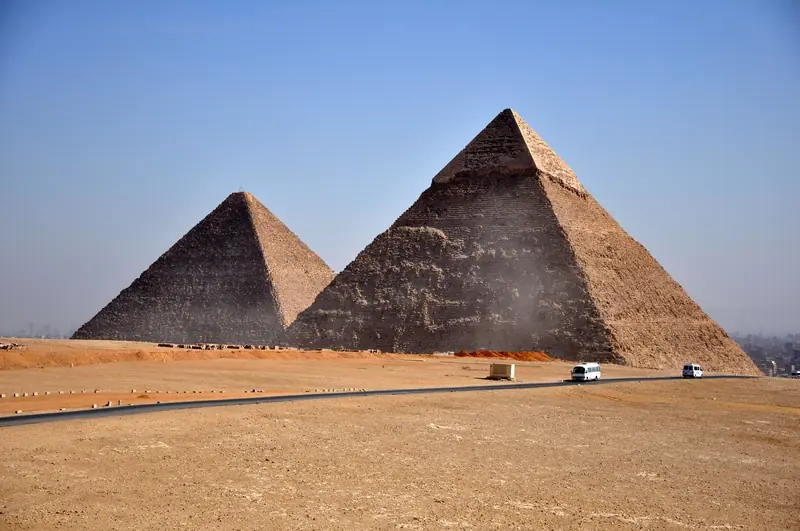
The Giza pyramids consist of three great pyramids standing side by side on the plateau at the western edge of Cairo (Khufu, Khafre and Menkaure), together with the Sphinx at their foot. Half a day is enough to see the plateau comfortably; going early in the morning protects you from both the heat and the crowds. To see all the pyramids in one frame, head for the viewpoints in the south-west of the plateau; to see the Sphinx, the area around the valley temple at the lower end is best.
For many people, visiting Giza means actually seeing a place they have known from pictures since childhood. In this article we explain how to tour the plateau, what to allow time for and some practical warnings.
What is on the plateau?
The Pyramid of Khufu (the Great Pyramid)
The largest of the three pyramids, it was built for Pharaoh Khufu (Cheops). It is known as the only one of the Seven Wonders of the Ancient World still standing today. When you get close, what surprises you most is that the surface, which looks smooth from afar, is actually made up of huge stone blocks. The outside of the pyramid was once clad in gleaming white limestone; most of this casing was removed over the centuries.
The Pyramid of Khafre
It was built for Khafre (Chephren), the son of Khufu. Because it stands on higher ground, from some angles it looks taller than the Great Pyramid. Some of the original casing stones still remain at its top, which makes it easy to recognise.
The Pyramid of Menkaure
The smallest of the three. Next to it are smaller pyramids built for queens. There are usually fewer crowds here.
The Sphinx
The giant statue with a lion's body and a human head stands at the lower end of the plateau, near Khafre's causeway structures. It is generally thought to date from Khafre's reign. To see the Sphinx up close, you pass through the valley temple beside it; from here, both the Sphinx's face and the pyramids behind it fit into the same photo.
A suggested order of visit
- Around the Great Pyramid: First thing in the morning, see the stone blocks up close before the crowds build.
- Viewpoint: Photograph the three pyramids side by side from the open area in the south-west of the plateau.
- Menkaure and the small pyramids: A peaceful walk.
- The Sphinx and the valley temple: Head down to the lower end as the last stop of the day.
The plateau is large; travelling between stops by vehicle saves time and energy, especially in the hot months or for older participants.
Is it worth going inside a pyramid?
The inner passages of some pyramids are open to visitors with a separate ticket and under certain rules. Inside are narrow, low-ceilinged, sloping and stuffy passages, and the burial chamber is plain and undecorated. We don't recommend it for anyone with claustrophobia or back or knee problems. For many people, the experience itself, being inside a pyramid, is worthwhile; but the answer to "what will I see inside?" is not a decorated room. As which pyramid is open at which time can change, you need to check before your trip.
Practical information for the plateau
- Heat and sun: There is almost no shade. Bring a hat, sunglasses, sunscreen and water.
- Shoes: Wear comfortable, closed shoes on the sandy and stony ground.
- Vendors and camel and horse offers: On the plateau, many people offer souvenirs and camel and horse rides. If you are not interested, a polite but firm "no, thank you" is enough. If you want to use a service, agree the price and duration up front.
- Photos: Climbing the monuments is forbidden and dangerous; take your photos from the ground.
For first-time visitors to Egypt, we have gathered details on bargaining, tipping and everyday practicalities in our article Tips for first-time visitors to Egypt.
Combining it with Saqqara
Saqqara, south of Giza, is famous for the Step Pyramid of Djoser and shows the earliest stages of pyramid architecture. Visiting Giza in the morning and Saqqara in the afternoon lets you see the story of the pyramids from beginning to end.
The second day of TatiliYakala's Egypt tour: Cairo and Luxor programme is planned exactly like this: the Giza pyramids and the Sphinx, then the Step Pyramid of Djoser at Saqqara in the afternoon. We finalise optional visits, such as entering a pyramid, together with you at the quotation stage.
For visa and entry requirements, check the current situation with Egypt's official sources and the Turkish Ministry of Foreign Affairs before you travel.
Giza with children and groups
For student groups and families with children, Giza means seeing on site a subject read about in books. A little preparation before you go on why and how the pyramids were built increases the questions and curiosity on the plateau. With large groups, setting the meeting point and time at the outset makes it easier to ensure no one gets lost on the vast plateau. It is also important to remind children regularly to drink water and protect themselves from the sun. A short break before the Saqqara visit makes the second half more productive.
Frequently asked questions
How long does it take to visit the Giza pyramids?
Half a day is enough to see the main sights of the plateau and the Sphinx. If you want to go inside a pyramid or take long photo breaks, allow a little more time.
Are the Giza pyramids in Cairo?
Giza is on the western edge of Cairo, close enough to be considered part of the greater city area. Travel time from the city centre varies with the traffic.
Is it allowed to climb the pyramids?
No. Climbing the monuments is forbidden; it damages the historic structures and is dangerous.
Can you see the Sphinx up close?
Yes. You can see the Sphinx quite close up from the viewing area beside the valley temple. As the area around the statue is protected, it is not possible to touch it.
What is the best time to go to Giza?
Early morning is best for cooler temperatures and fewer crowds. At midday it is very hard to find shade on the plateau.