
 5 nights, 6 days
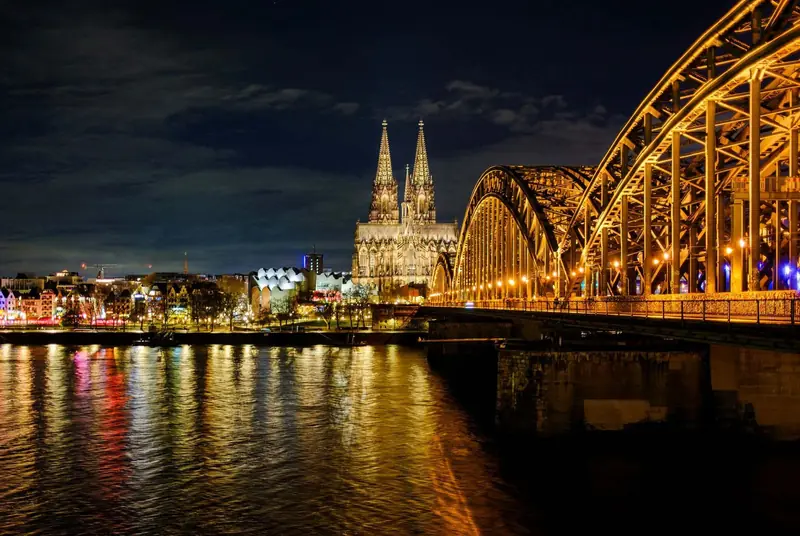
Benelux, Paris and Germany Tour
Brussels, Bruges, Amsterdam, Cologne
From Italy to the Netherlands, from Prague to the Balkans: a tour that links Europe's great cities in one long route.
The price is prepared according to your dates, group size and preferences.
The route runs via Kavala and Thessaloniki to Igoumenitsa, and from there to Bari and Rome in Italy. After Pisa and Florence you continue to Paris, where you spend two days.
You travel via Bruges and Brussels to Amsterdam. Then you tour Central Europe with Prague, Vienna and Budapest, and the Balkans with Belgrade and Sofia, before returning to Istanbul.
Send us your dates and group size for Grand Europe and we will tailor the programme to your group.
The daily route follows the programme in the catalogue. A detailed itinerary is shared with the quote.
The catalogue gives the tour length as 13 nights, 14 days, but the daily programme lists 13 days. The final day plan is confirmed in the quote.
Founded in 315 BC, Thessaloniki is Greece's second-largest city. Its Early Christian and Byzantine monuments were added to the UNESCO World Heritage List in 1988. The house where Mustafa Kemal Atatürk was born in 1881 and the White Tower, the city's symbol, are the main stops.
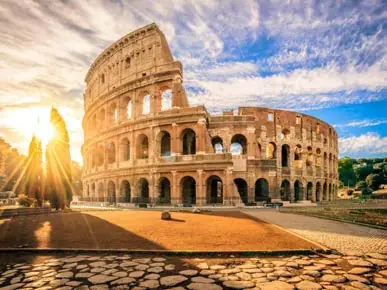
The historic centre of Rome, the capital of Italy, was added to the UNESCO World Heritage List in 1980. The Colosseum, the Roman Forum, the Pantheon and the Trevi Fountain are its main sights; the Vatican also lies within the city.
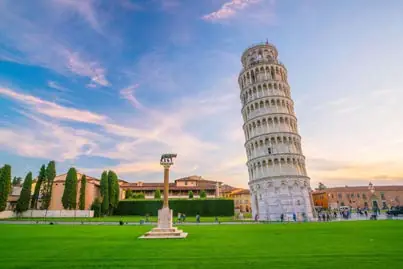
Pisa's Piazza del Duomo, also known as the Square of Miracles, is home to the cathedral, the baptistery, the cemetery and the famous leaning bell tower, begun in the 12th century. The site was added to the UNESCO World Heritage List in 1987.
The historic centre of Florence, the heart of the Renaissance, was added to the UNESCO World Heritage List in 1982. Its main sights are the Cathedral of Santa Maria del Fiore with Brunelleschi's dome, the Uffizi Gallery and the Ponte Vecchio.
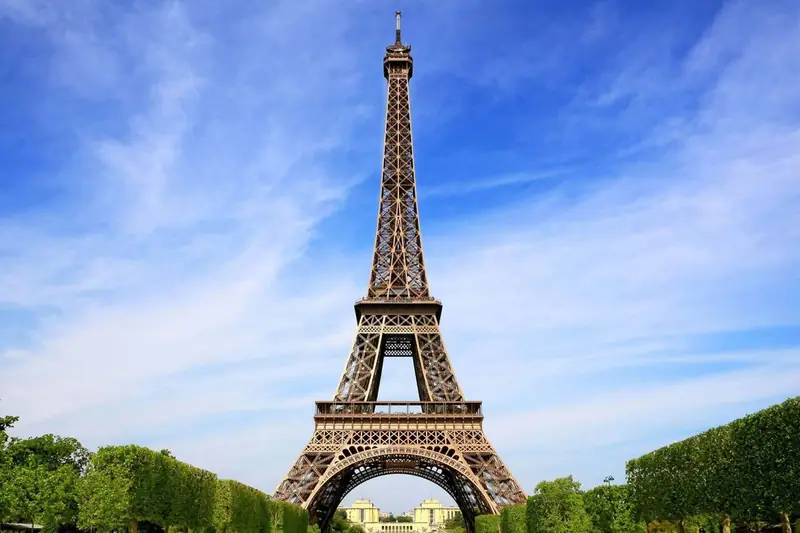
The capital of France. The banks of the Seine were added to the UNESCO World Heritage List in 1991; the Louvre, Notre-Dame, the Eiffel Tower (1889) and the Champs-Élysées are the city's main landmarks.
A Belgian city that preserves its medieval fabric, surrounded by canals. Its historic centre was added to the UNESCO World Heritage List in 2000; the Markt square and the belfry are the main sights.
The capital of Belgium and home of the European Union institutions. The Grand-Place, surrounded by guildhalls and the town hall, was added to the UNESCO World Heritage List in 1998; the Atomium, built for the 1958 World's Fair, is another of the city's symbols.
The capital of the Netherlands. Its 17th-century canal ring was added to the UNESCO World Heritage List in 2010. The Rijksmuseum, the Van Gogh Museum and the Anne Frank House are the main places to visit.
The capital of Czechia. Its historic centre was added to the UNESCO World Heritage List in 1992; Prague Castle, the Charles Bridge and the astronomical clock in the Old Town Square are the main sights.
The capital of Austria and the centre of the Habsburg Empire. Its historic centre was added to the UNESCO World Heritage List in 2001; the Hofburg Palace, St Stephen's Cathedral and Schönbrunn Palace are its main landmarks.
The Hungarian capital, formed by the union of Buda and Pest on either side of the Danube. The banks of the Danube, the Buda Castle Quarter and Andrássy Avenue are on the UNESCO World Heritage List; the city is known for its Parliament building and thermal baths.
The capital of Serbia, set where the Sava and Danube rivers meet. Belgrade Fortress, overlooking the rivers, and the surrounding Kalemegdan Park are the city's main historic area; pedestrianised Knez Mihailova Street is the main axis of the centre.
The capital of Bulgaria. The Alexander Nevsky Cathedral, completed in the early 20th century, the 16th-century Banya Bashi Mosque attributed to Mimar Sinan, and the Roman-era remains of Serdica stand side by side in the city centre.
May to September is a good time thanks to long days and mild weather; July and August are the busiest months at tourist sights.
| Country | Visa (Turkish citizens) | Currency | Time difference | Language |
|---|---|---|---|---|
| Greece | Schengen visa required | Euro (EUR) | 1 hour behind Türkiye in winter; same time during summer time | Greek |
| Italy | Schengen visa required | Euro (EUR) | 2 hours behind Türkiye in winter; 1 hour behind during summer time | Italian |
| France | Schengen visa required | Euro (EUR) | 2 hours behind Türkiye in winter; 1 hour behind during summer time | French |
| Belgium | Schengen visa required | Euro (EUR) | 2 hours behind Türkiye in winter; 1 hour behind during summer time | Dutch, French, German |
| Netherlands | Schengen visa required | Euro (EUR) | 2 hours behind Türkiye in winter; 1 hour behind during summer time | Dutch |
| Czechia | Schengen visa required | Czech koruna (CZK) | 2 hours behind Türkiye in winter; 1 hour behind during summer time | Czech |
| Austria | Schengen visa required | Euro (EUR) | 2 hours behind Türkiye in winter; 1 hour behind during summer time | German |
| Hungary | Schengen visa required | Hungarian forint (HUF) | 2 hours behind Türkiye in winter; 1 hour behind during summer time | Hungarian |
| Serbia | No visa needed for tourist visits (up to 90 days within 180 days) | Serbian dinar (RSD) | 2 hours behind Türkiye in winter; 1 hour behind during summer time | Serbian |
| Bulgaria | Schengen visa required (Bulgaria has been a full Schengen member since 2025) | Euro (EUR), from 1 January 2026 | 1 hour behind Türkiye in winter; same time during summer time | Bulgarian |
Visa and entry requirements may change; check the current situation with the relevant consulate before you travel.
Visa and passport requirements vary by country, passport type and date. We share the current requirements at the quote stage; as application times can be long, we recommend planning early.
The route in the catalogue passes through Greece, Italy, France, Belgium, the Netherlands, Czechia, Austria, Hungary, Serbia and Bulgaria.
The catalogue does not specify the mode of transport. The route includes a sea crossing between Igoumenitsa and Bari; the transport plan is set out in writing in the quote.
May to September is a good time thanks to long days and mild weather; July and August are the busiest months at tourist sights.
What is covered for transport, guiding, admission fees and meals is stated in writing in the quote, according to your dates, group size and preferences. Services marked as extras in the catalogue are charged separately.
Dates are planned according to group requests and the season. Tell us your preferred period and group size, and we will share suitable date options with the quote.
Get a quote
Tell us your dates, group size and, if applicable, your school or organisation details, and we will prepare the programme and price for your group and get back to you.
Travel agency with licence number A-12881, since 2012
International Tours
5 nights, 6 daysBrussels, Bruges, Amsterdam, Cologne
 7 nights, 8 days
London, Edinburgh, Wales, Northern Ireland
 5 nights, 6 days
Stockholm, the Norwegian fjords, Copenhagen