
International · Samarkand
Places to Visit in Samarkand: Registan, Gur-e Amir and Shah-i-Zinda
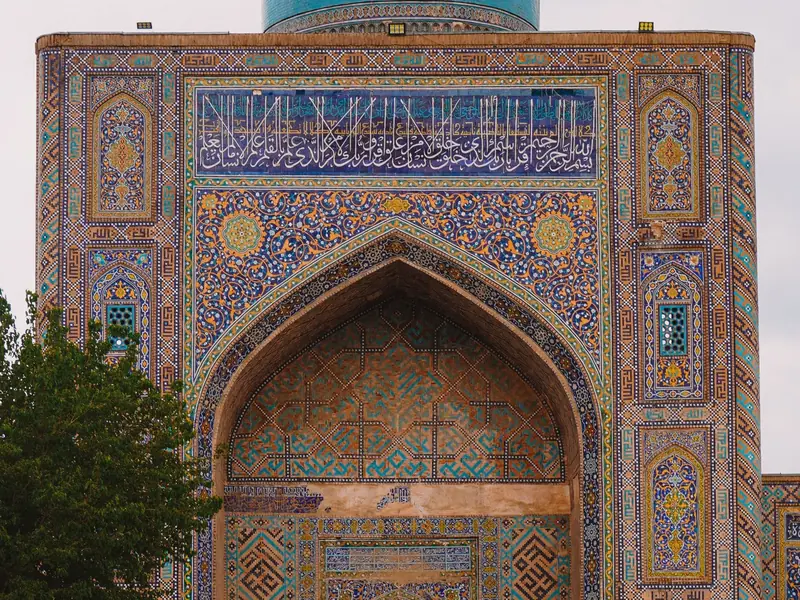
These are the five places you must see in Samarkand: Registan Square, framed by three madrasas; Gur-e Amir, the mausoleum of Timur; Shah-i-Zinda, where mausoleums stand in a row; Bibi-Khanym, the giant mosque of the Timurid era; and the Siab Bazaar right next to it. All of these can be seen comfortably in a day and a half to two days; try to see the Registan both by day and lit up in the evening.
Samarkand is one of the oldest and most famous cities of the Silk Road. At the end of the 14th century it became Timur's capital, and in the following century, under his grandson Ulugh Beg, it turned into a centre of science and the arts. Most of the turquoise domes and tiled façades you see today are the work of these periods.
Registan Square
It is the heart of Samarkand and one of the best-known squares in Central Asia. Three madrasas surround the square on three sides:
- Ulugh Beg Madrasa: The oldest of the three. It is known as a centre of learning because of the importance Ulugh Beg gave to astronomy and mathematics.
- Sher-Dor Madrasa: It stands out for the sun faces and lion-like animal figures on its façade; it attracts extra interest because depictions of living beings are rare in Islamic architecture.
- Tilya-Kori Madrasa: It was used as both a madrasa and a mosque. The gilded decoration inside is the reason its name means "covered in gold".
Tip: Visit the Registan by day to see the colours of the tiles, and a second time in the evening to see it lit up. Today the madrasa courtyards house handicraft and souvenir shops.
Gur-e Amir
This is the mausoleum of Timur and some members of his family. From outside it is instantly recognisable by its ribbed turquoise dome; inside, the gold decoration and the tombstone made of dark green stone are the building's most striking details. Ulugh Beg is also buried here. The mausoleum is cited as a source of inspiration for the monumental mausoleums of later Central Asian and Indian architecture.
The dome is lit up in the evening, and since it is a short walk from the Registan, you can see both places on the same evening.
Shah-i-Zinda
This ensemble of mausoleums lined up along a hillside is one of the most enchanting places in Samarkand. As you walk along a narrow lane, mausoleums from different periods on both sides offer what is almost an exhibition of tile and mosaic decoration. Its name means "the living king" and is based on a belief about Qusam ibn Abbas, the cousin of the Prophet Muhammad.
Shah-i-Zinda is also a place of pilgrimage, so you need to dress modestly and keep quiet. It is a good idea for women to carry a headscarf. Wear comfortable shoes for the steps and sloping ground.
Bibi-Khanym Mosque
Built by Timur after his campaign in India, this mosque was designed as one of the largest of its time. Its giant entrance gate and domes still stand out on the city skyline. Much of the building collapsed over time and was restored with extensive work in the 20th century. According to legend, its name comes from one of Timur's wives.
Siab Bazaar
The Siab Bazaar, right next to the Bibi-Khanym Mosque, is a very lively market where you can see Samarkand's daily life up close. Dried fruit, nuts, spices, fresh fruit and vegetables and the famous Samarkand non (a round, patterned bread) are sold here. Sellers often offer tastings; bargaining is common when shopping in the bazaar.
If you have time
- Remains of the Ulugh Beg Observatory: For those who want to see traces of Ulugh Beg's astronomical work.
- Afrasiyab: Samarkand's ancient settlement area; it tells the story of the city's pre-Islamic past.
- Paper workshops: Workshops keeping the Samarkand paper tradition alive are interesting for anyone who likes handicrafts.
How do you get to Samarkand?
The Afrosiyob high-speed train runs between Tashkent and Samarkand; the journey takes about 2 to 2.5 hours. In TatiliYakala's Uzbekistan tour: Tashkent, Samarkand and Bukhara programme, you take this train to Samarkand on the morning of day two and visit Registan Square and Gur-e Amir. Day three is devoted to Shah-i-Zinda, the Bibi-Khanym Mosque and the Siab Bazaar; in the evening you take the train to Bukhara. This programme is a new route not in the catalogue, and we finalise the details together at the quote stage.
For the next part of the route, see our Bukhara travel guide, and for the food, our guide to Uzbek cuisine.
For visa and entry requirements, check the current situation with Uzbekistan's official sources and the Republic of Türkiye Ministry of Foreign Affairs before you travel.
Clothing and pace in Samarkand
Most of Samarkand's monuments are in the open air, and you walk for long stretches on stone surfaces. Always have comfortable shoes, a hat and water with you. When visiting mosques, madrasas and mausoleums, choose clothes that cover the shoulders and knees. The monuments in the city centre are not far from each other; you can get between the Registan, Gur-e Amir and Bibi-Khanym on foot or with short drives. For photos, the soft morning light and the evening illuminations are the best times.
Frequently asked questions
How many days do you need to see Samarkand?
A day and a half to two days is enough for the main sights. Those who want to see extra places such as the Ulugh Beg Observatory and Afrasiyab can set aside one more day.
Can you visit Registan Square in the evening?
Yes, the Registan looks very impressive when it is lit up in the evening. Seeing it separately by day and in the evening lets you experience two different sides of the square.
Who is buried in Gur-e Amir?
Gur-e Amir is the mausoleum of Timur and some members of his family. His grandson Ulugh Beg is also here.
Is there a dress code at Shah-i-Zinda?
Since it is also a place of pilgrimage, clothes that cover the shoulders and knees should be worn. It is a good idea for women to carry a headscarf.
What should you buy in Samarkand?
Samarkand non, dried fruit and nuts, silk and suzani embroidery, and products made from Samarkand paper are the most popular souvenirs.