International · Spain
Things to See in Madrid and Andalusia: Toledo, Seville, Córdoba, Granada
On a Madrid and Andalusia route, the priority list can be summed up like this: in Madrid, the Prado Museum and the area around the Royal Palace; in Toledo, the walled historic city; in Seville, the Cathedral, the Giralda and the Real Alcázar; in Córdoba, the Mezquita; and in Granada, the Alhambra and the Albaicín quarter. These five cities bring together Spain's face as a capital and the Andalusian heritage spanning eight centuries on the same route. Below you will find what to allow time for at each stop.
Madrid: museums, squares and parks
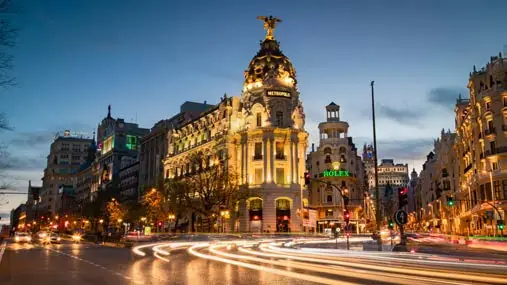
Madrid is the gateway in and out of the Andalusia route. The places you can see in a short time are close to each other:
- Puerta del Sol and Plaza Mayor: The squares regarded as the centre of the city. The arcades around Plaza Mayor are a good place to start an evening stroll.
- Royal Palace and Almudena Cathedral: Two large buildings facing each other. Watching the sunset from the gardens in front of the palace is a local habit.
- Prado Museum: Works by Spanish masters such as Velázquez, Goya and El Greco. Velázquez's Las Meninas (The Ladies-in-Waiting) is one of the museum's icons.
- Reina Sofía Museum: The modern art museum that houses Picasso's Guernica.
- Retiro Park: The city's green lung, where you can row on the lake.
Toledo: city of three cultures
Toledo is a walled medieval city built on a hill in a bend of the River Tagus. It is known as a centre where Christian, Muslim and Jewish communities lived side by side for centuries, which is why it is called the "city of three cultures".
The sights include the Gothic cathedral, synagogues, former mosques and works by El Greco. The city's tradition of arms and sword-making is also famous; shops in the narrow streets still sell decorative swords. The real joy of Toledo is the view of the city from the opposite bank of the river.
Seville: the heart of Andalusia
Seville is one of the cities given the most time on the route, and it deserves it.
- Seville Cathedral and the Giralda: The Giralda, the bell tower of what is described as one of the largest Gothic cathedrals in the world, was in fact created by adding to a minaret from the Almohad period.
- Real Alcázar: One of the most impressive examples of the Mudéjar style, in which Islamic and Christian architecture intertwine. You can spend hours exploring its courtyards, tiles and gardens.
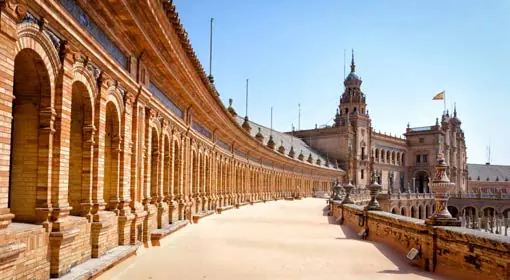
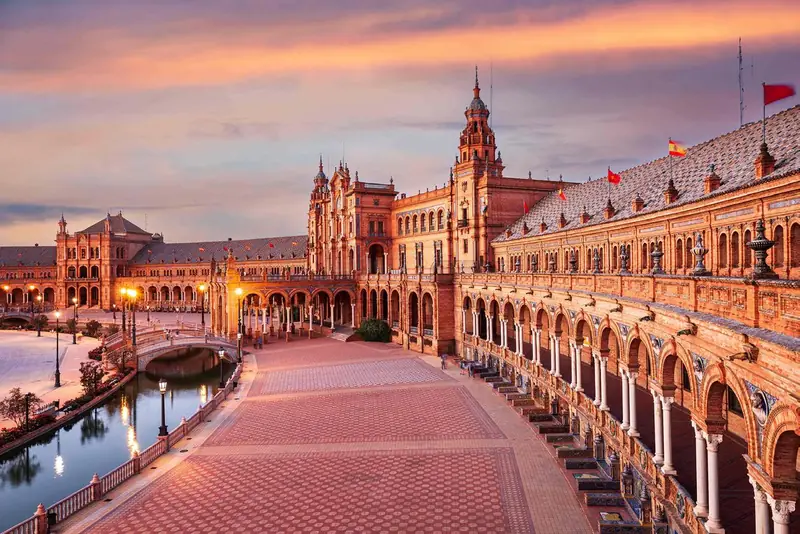
- Plaza de España: With its canal and tiled panels depicting the regions of Spain, this huge semicircular square is one of the most photographed places in the city.
- Santa Cruz quarter: The old Jewish quarter, with narrow, shady streets and flower-filled courtyards.
- Triana: The neighbourhood on the opposite bank of the Guadalquivir, known for its ceramics workshops and flamenco tradition.
Watching a flamenco show in Seville in the evening is a good way to understand the spirit of the city.
Córdoba: the Mezquita and the Jewish quarter
Córdoba's symbol is the Mezquita-Cathedral: built under the Umayyads, with a cathedral later added inside, it is known for its forest of columns with red and white arches that seem to stretch on forever. You can also have a look at our article The Islamic heritage of Andalusia, where we describe the building in detail.
The Judería (the old Jewish quarter) around the Mezquita, with its whitewashed walls and courtyards decorated with flowerpots, deserves a short walk. Looking at the city from the Roman Bridge over the Guadalquivir is also a lovely way to end the visit.
Granada: the Alhambra and the Albaicín
Granada was the capital of the Nasrids, the last Muslim kingdom of Andalusia, and the most magnificent trace of this legacy is the Alhambra Palace. With its courtyards, fountains and richly decorated halls, the palace is considered one of the masterpieces of Islamic architecture. Visits to the Alhambra are subject to quotas, and tickets often sell out in advance.
The Albaicín, on the hill opposite the Alhambra, is the old Muslim quarter with narrow, steep streets. Looking out at sunset from the neighbourhood's Mirador de San Nicolás viewpoint to the Alhambra and the Sierra Nevada mountains behind it is one of Granada's most unforgettable moments. In Granada, being served a small tapa with your drink in cafés is also a well-known local tradition.
How to set priorities on a short programme
On a route that fits five cities into a few days, it is impossible to give every place equal time. Ask yourself these questions when setting your priorities:
- Architecture or museums? If you are curious about Andalusia's Islamic heritage, Córdoba and Granada stand out for you. If you are interested in painting, you need to set aside time for the Prado in Madrid.
- Atmosphere or monuments? Seville's real magic lies in its streets, squares and evening life. Here, leave time for strolling rather than rushing from one monument to the next.
- Photo spots: Seeing Toledo from the opposite bank of the river, Granada from the Albaicín and Seville from the Plaza de España makes even a short stop unforgettable.
Comfortable shoes, and a hat and water in summer, are essentials on this route.
Seeing this route on one tour
The Madrid and Andalusia Tour is a 4 nights, 5 days programme with hotel accommodation. The day after arriving in Madrid, you travel to Seville via Toledo, and the third day is devoted entirely to Seville. On the fourth day you move on to Granada via Córdoba, and on the last day you return from Granada to Madrid and on to Istanbul.
The catalogue lists only the daily itinerary. Whether quota-based visits such as the Alhambra are added to the programme is confirmed in the quote depending on the date and ticket availability. Our article When to go to Spain can also help you decide when to travel.
Frequently asked questions
Which cities should you see in Andalusia?
Seville, Córdoba and Granada are the three key cities of Andalusia. Toledo, on the way from Madrid, also adds a great deal to the route.
What do you need to do to see the Alhambra Palace?
The Alhambra is a quota-based visit and tickets usually sell out in advance. For group trips, whether this visit can be added to the programme is confirmed at the quotation stage depending on the date and ticket availability.
What can you see in Madrid in a day?
Puerta del Sol, Plaza Mayor, the area around the Royal Palace and Retiro Park can be seen on foot in a day. You need to set aside a few extra hours for the Prado Museum.
Do you need a visa for Spain?
Visa and passport requirements may change. Before you travel, check the current situation with the official sources of the country concerned and the Turkish Ministry of Foreign Affairs.